
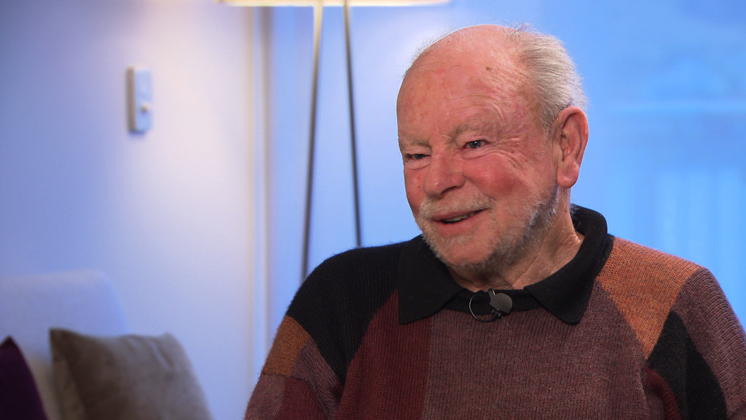
Few producers embodied the fearless ingenuity of New Zealand’s early screen renaissance quite like Grahame “Superfly” McLean. A man of boundless energy, wry humour, and unrelenting curiosity, McLean’s multi-hyphenate career, spanning theatre, film, and television – helped lay the groundwork for a generation of filmmakers who would go on to define Aotearoa cinema.
Grahame once joked that he possessed “a dangerously small knowledge of many things.” In truth, that restless versatility was his strength. From his beginnings in Wellington theatre, building sets for drama, ballet and opera productions, and reconfiguring the Downstage Theatre stage, he transitioned to screen work at a time when New Zealand had little infrastructure and even less precedent.
In 1973, while producing a James K Baxter memorial season at Victoria University (with sets by Colin McCahon), McLean was approached by John Barnett to produce The Games Affair, the first independently-made drama series to screen on New Zealand television. It marked the start of a remarkable run that would see his name attached to many of the country’s formative productions: Hunter’s Gold, Sleeping Dogs, Beyond Reasonable Doubt, Sons for the Return Home and A Woman of Good Character, among others.
Working in the 1970s and early ’80s often meant juggling parallel careers to survive so he famously split his weeks between television production and property restoration in Queenstown, but his determination and instinct for talent were constant. He gave early breaks to many who would become industry heavyweights: scriptwriter Fran Walsh and future Film Commission head Don “Scrubbs” Blakeney among them.
When Roger Donaldson’s Sleeping Dogs kicked the New Zealand feature industry into gear, Grahame was there, combining the roles of production manager and first assistant director, brokering deals for everything from Air Force jets to car rentals, and helping prove that local crews could pull off a feature against the odds. “Very few people, very little money, and a huge number of deals,” he recalled. “You’d just go out and beg and borrow and steal.”
By the mid-1980s, Grahame had expanded into various other roles. His slate included Shopping Cars on Bicycle Tires (1981), Flying Light (in a Sky of Our Own) (1983), and producing and directing two back-to-back feature films – Should I Be Good? and The Lie of the Land, both shot outside the New Zealand Film Commission’s orbit. Despite their critical ambition, Grahame found himself snubbed by the Commission’s marketing arm, a decision he met with typical pragmatism: he simply toured the films himself, alongside Peter Jackson’s Bad Taste.
He was an early champion of Fran Walsh, employing her as a writer on Worzel Gummidge Down Under and later working with her on The Ray Bradbury Theatre – the first official co-production between Canada and New Zealand. His career bridged eras, moving from the handmade hustle of the 1970s to the increasingly globalised screen landscape of the 1980s and beyond.
Grahame’s curiosity took him well beyond film sets. He produced Flying Fox in a Freedom Tree in Samoa, was heavily involved in the restoration of Wellington’s Embassy Theatre, established a winery for cinematographer Michael Seresin, and built homes in the Queenstown hills where he once shot A Woman of Good Character. Through all of it ran a trademark mix of wit and endurance. “Somebody once asked me why I worked in the film industry,” he said. “And I said it’s because I couldn’t think of anything harder to do.”
That spirit, part adventurer, part craftsman, part gambler, defined Grahame McLean’s life and work. His was a career forged in the crucible of New Zealand’s creative awakening: a time when the rules were being written, and he helped write them. Those who knew him will speak of his generosity, his appetite for risk, and his refusal to accept that anything was impossible.
Those who worked with him often joked about his habit of “sleeping on the job”, not out of laziness, but sheer commitment. It wasn’t unusual to find him on the couch or under a desk after another all-nighter in the production office. He poured everything into his work, and his frugality was legendary, always determined to “put the money on the screen.” That same spirit once saw him leading the charge to bed down on the floor of the New Zealand Film Commission’s office at Cannes, a wry symbol of his resourcefulness and unflagging dedication to getting the job done.
The New Zealand screen industry owes much to pioneers like Grahame McLean, the ones who built it from scratch, one borrowed camera and one wild idea at a time. Go well dude.
Check out more about Grahame at NZ On Screen